
ome ideas never go away. Three transportation projects first proposed decades ago - a Second Avenue subway, a Long Island Rail Road connection to Grand Central Terminal and a direct train ride from Manhattan to Kennedy Airport - all find themselves in some stage of planning now.
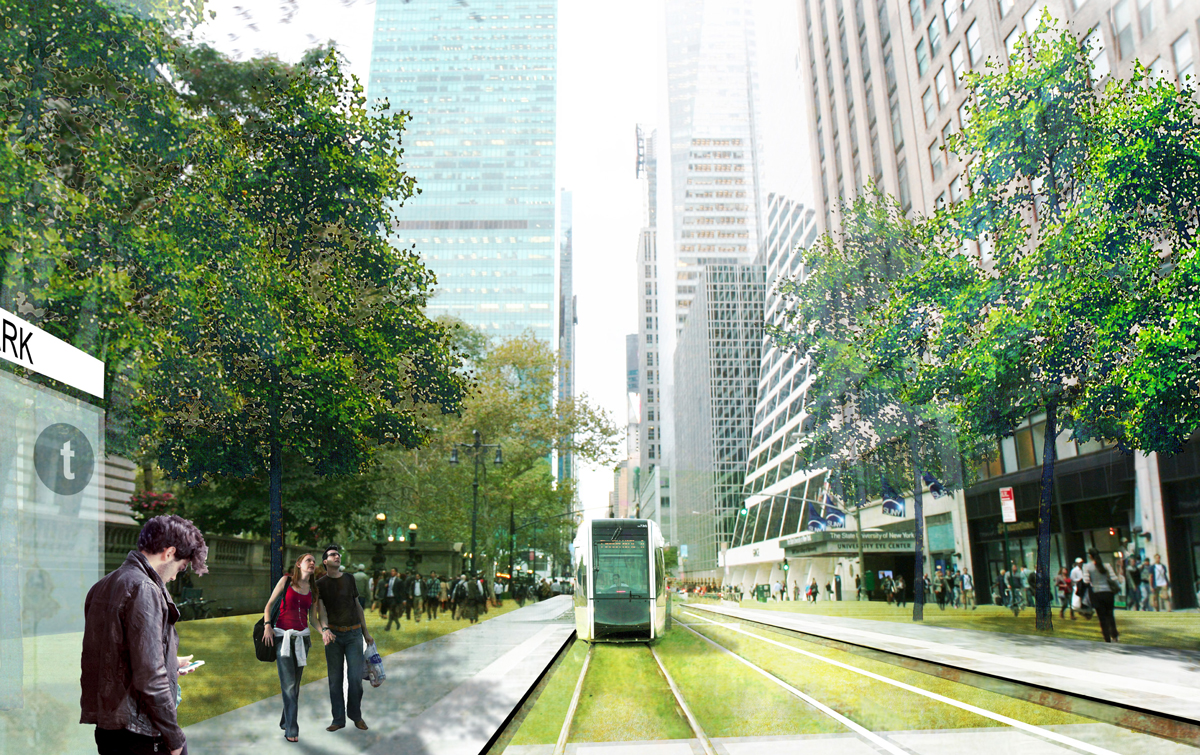
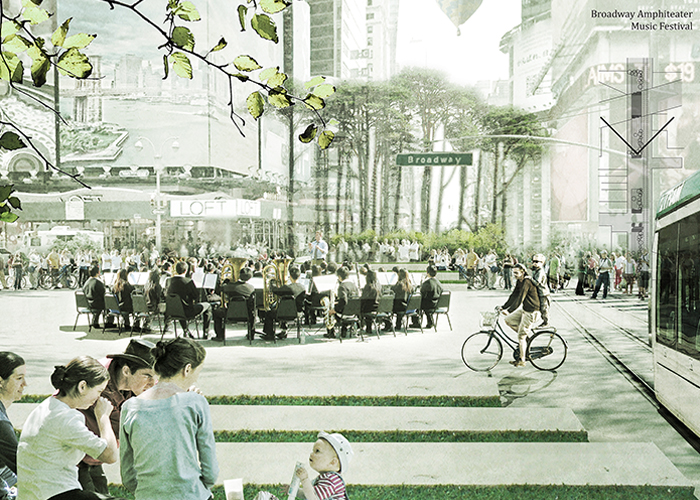
A man named George Haikalis would like to revive another long-discussed project. He wants New York City to build a crosstown light-rail line on 42nd Street and to close the street to vehicles. He wishes to create, in effect, a giant pedestrian mall between the Hudson and East Rivers.
At first, Mr. Haikalis, a civil engineer and a transportation planner who once worked for the Metropolitan Transportation Authority, may seem like just another dreamer with a grandiose but improbable plan.
But after six years, he raised nearly $200,000 to pay for a series of technical studies that he says demonstrate the tremendous benefits for the economy, the transit system and the environment from a light-rail system, the term now preferred for streetcars and trolleys.
Mr. Haikalis plans to present the three studies tonight at the Marriott Marquis Hotel in Times Square at a meeting sponsored by C. Virginia Fields, the Manhattan borough president, who is running for mayor. While she has not endorsed the plan, her interest in it is a modest step forward for an idea that has persisted through four mayoral administrations.
Streetcars were the dominant mode of public transit on 42nd Street from 1898 to 1946, when they were replaced by buses.
The City Planning Commission considered an above-ground rail line on 42nd Street in 1978. The Department of Transportation commissioned its own study a few years later. Then the Metropolitan Transportation Authority took a look.
In June 1994, the City Council gave overwhelming approval to the project, which was estimated to cost $135 million. The city was authorized to choose one of four bidders to lay the track, build the cars and operate a new trolley system as a franchise.
And then the plan quietly died. Rudolph W. Giuliani, the mayor at the time, withdrew his initial support, citing concerns about the feasibility and cost. Deeply discouraged, the leading proponent of the project, Frederic S. Papert, gave up promoting it.
Mr. Papert, who runs the 42nd Street Development Corporation, a nonprofit group that has worked on redeveloping Theater Row since the 1970's, sought to have three of the six lanes on 42nd Street dedicated for use by streetcars, while the other three lanes would be used for one-way westbound traffic.
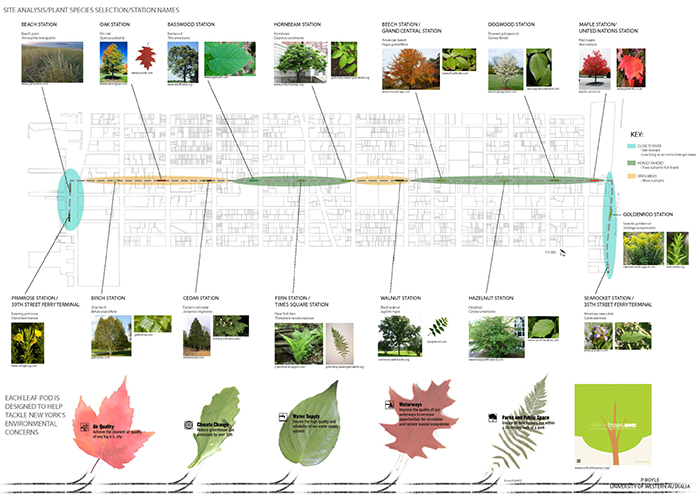
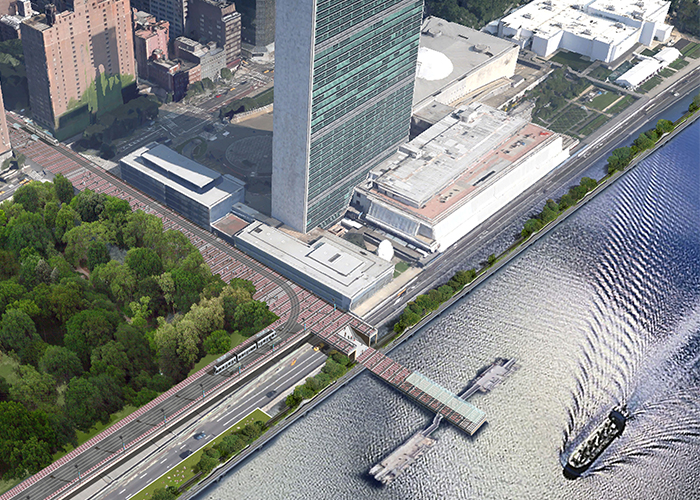
Mr. Haikalis's idea is, in some respects, more ambitious. He wants to close the 60-foot-wide street to cars and trucks altogether. The M42 bus line would be replaced with a 2.5-mile light rail: 1.9 miles on 42nd Street, between First and 12th Avenues, and short extensions to two ferry terminals, at 39th Street on the Hudson River and 35th Street on the East River.
The typical travel time from end to end would be slightly more than 21 minutes, based on 20 seconds of "dwell time" at each of its 16 stops and the current configuration of traffic lights, according to Halcrow, a London-based planning and design company that conducted one of the technical studies.
Each rail car would be 150 feet long and hold up to 300 passengers, with low floors to make the cars easy to board and exit, even for disabled riders. The Halcrow study found that the rail system would cost as much to operate as the buses it would displace but would carry three times as many passengers.
According to the study, the project would cost $360 million to $510 million. The biggest single expense would probably be moving underground utility connections, including water and sewer mains, gas pipes and cables for telecommunications and electricity.
A second study, by Samuel I. Schwartz, a former first deputy transportation commissioner, concluded that the traffic changes from banning vehicles could be managed by adjusting parking rules, traffic-regulation enforcement, lane markings on surrounding streets and traffic-signal timing.
The final study commissioned by Mr. Haikalis concluded that the rail project would save travel time, increase office rent and occupancy rates, and reduce traffic accidents.
According to that study, by Regina Armstrong, an economist at Urbanomics of New York and New Jersey, a consulting firm, the project would raise nearby property values by $3.6 billion and bring about $527.3 million in annual net benefits to the city's economy, primarily through higher city and state tax revenues. That sum takes into account the estimated $84.1 million cost each year for diverting traffic and deliveries from the street. The light rail would cost $29.7 million to $39.4 million to operate each year, she found.
Even if political support for the project could be found, the technical challenges would be considerable. For instance, overhead electrical wires would be the simplest power source for the streetcars, but they are considered unsightly. Other options are hydrogen fuel cells or vehicles that use a hybrid of diesel and electricity. It is unclear which public entity, if any, would be willing to operate the system.
Quite often, detailed studies follow political support. Mr. Haikalis seems to have the process in reverse. A small nonprofit group he founded in 1997, the Institute for Rational Urban Mobility, paid for the studies using a grant from an anonymous donor, through the New York Community Trust, a foundation.
Mayor Michael R. Bloomberg has invested much of his political capital in the proposal to build a football stadium and convention center on the Far West Side. A $2.1 billion extension of the No. 7 subway line, to be paid for by the city, is a major element of that plan.
City officials, while skeptical, said they were willing to hear Mr. Haikalis's ideas.
"In the past, we've had concerns about the feasibility of a 42nd Street light rail, particularly because of construction and traffic mitigation issues," said Kay Sarlin, a spokeswoman for the Department of Transportation. "The city's current transit priority in the area is extending the No. 7 train. However, we've met with the institute to discuss its proposal, and we look forward to seeing more detailed plans."
Ms. Sarlin noted that two subway lines - the shuttle and the No. 7 - already run under the street, although they cover only the stretch between Grand Central and Times Square.
A spokesman for Consolidated Edison, which objected to the project in the early 1990's, was noncommittal. "We'd have to review the details," said the spokesman, Michael S. Clendenin. "Relocation costs with any project are always a concern."
Ms. Fields, the Manhattan borough president, said she was intrigued by the proposal. "I am interested in exploring alternative transportation modes, from east to west, as a way of reducing congestion and dealing with environmental issues from the many cars on 42nd Street," she said.
More than 20 major cities - including Los Angeles, Boston and Pittsburgh - have built light-rail systems in recent decades. Across the Hudson, New Jersey Transit has three light-rail lines: the Newark subway, the Hudson-Bergen Light Rail connecting Bayonne, Jersey City and Hoboken, and the new River Line between Camden and Trenton.
Michael Horodniceanu, a former city transportation official who is not involved in the effort, said support for a light-rail line might ultimately have to come from pedestrians, commuters and drivers who are tired of congestion.
"As time passes and as we become more and more dependent on transit rather than on cars, the chances are going to get better and better," he predicted.
Special Offer: Home Delivery of The Times from $2.90/week.