
The Purpose
Images/Maps
Technical Studies
Key Ingredients
Light Rail Defined
Precedents
vision42 and #7 Subway
Traffic Issues
Proposers + Supporters
Early Action Agenda

FAQ


  Light Rail Defined

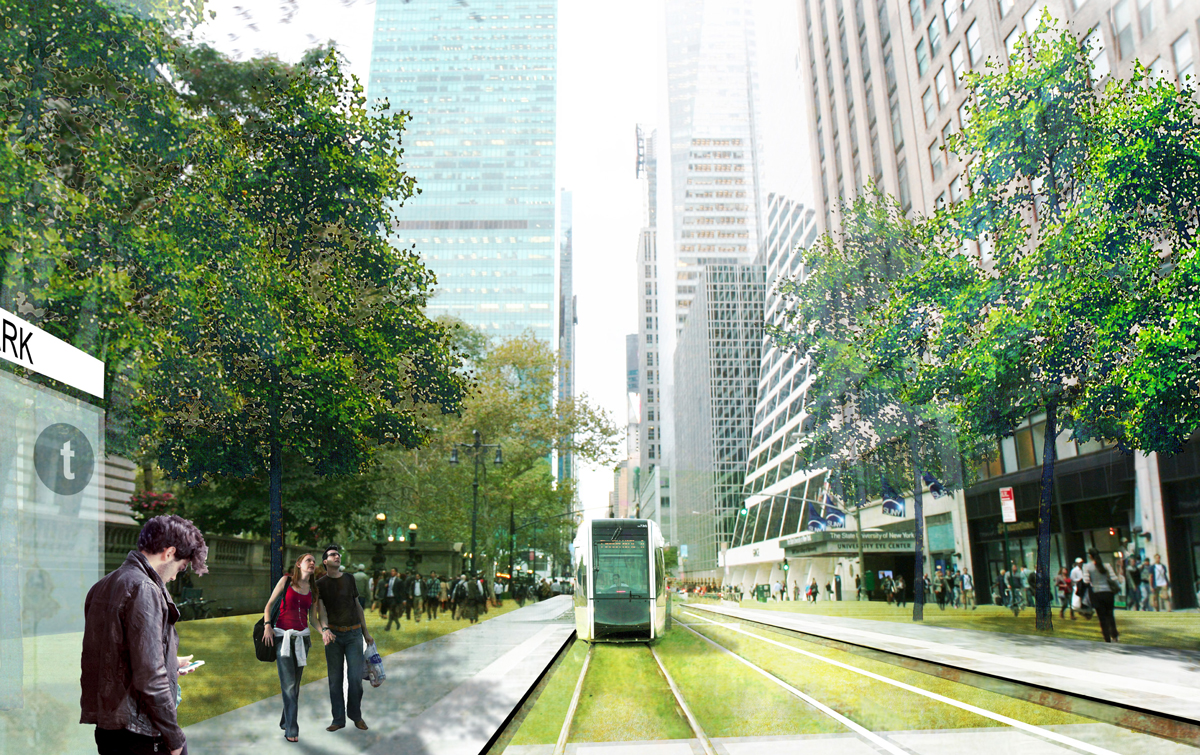
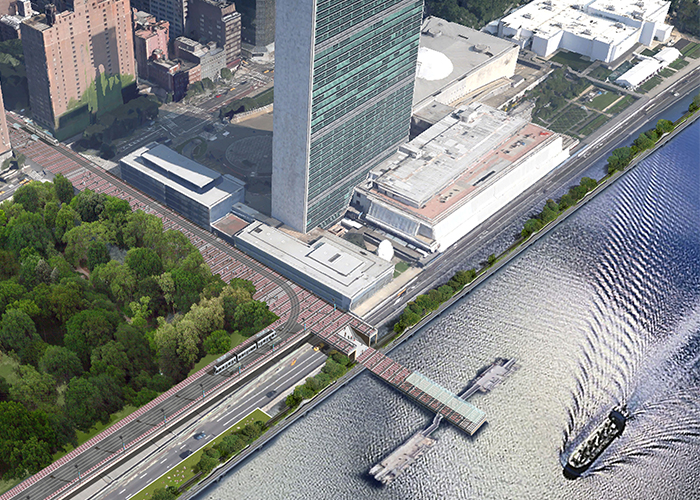
Modern light rail is the updated version of streetcar technology, re-engineered with low floors to meet contemporary needs for accessibility by seniors, parents with strollers, and persons in wheelchairs, while permitting reduced boarding times and higher capacity. Its longer vehicles allow greater driver productivity than with buses, cutting operating costs. Located at-grade, its easy boarding and inexpensive station platforms will allow frequent access points at every major avenue along 42nd Street, making it an ideal distributor for the subways and north/south buses. It will extend the reach of the subways, serving the ferries, massive new developments planned along the East and Hudson Rivers, and important tourist generators on the waterfronts, such as the UN Headquarters and the Javits Convention Center.


Costs and Funding
Posted on this website is a detailed cost estimate of the vision42 plan, including utility issues and landscaping elements, which has been prepared by the global engineering firm Halcrow, Inc., with New York engineering subcontractors studying local issues. The capital costs are estimated at between $360 million and $510 million in 2004 dollars, depending upon the extent of utility relocations (which will depend upon political decisions).

Also posted on this site are studies of the anticipated economic impacts of the project, performed by the well-regarded NYC firm Urbanomics. The economic analyses indicate that the economic benefits would amount to $705 million annually, and that the fiscal benefits to the City and State would be $305 million annually. Assuming these extraordinary gains can be attained, the project would pay for itself in a little over four months!

The substantial fiscal and economic gains resulting from vision42 can be captured by a variey of financial mechanisms. Since these gains would not occur without the project, a case could be made for funding the project through the MTA capital program. A separate tax assessment district could be created by the City and the State to target the gains more specifially.  

The 42nd Street light rail line would be an integral part of the City's transportation system, every bit as vital as the Second Avenue subway and the LIRR access to Grand Central, and in fact, complementary to these two projects. Given its far lower cost and substantial user base, the project should compete well for federal and local transportation funds. To cover the cost of pedestrian amenities, a package of funds is possible—some from the MTA, some from tax increment financing (a mechanism proposed for funding the #7 subway extension), and some from highway resources. For a high quality of design and maintenance, amenities may need to be underwritten with supplemental private funds to achieve an appropriate level of excellence.


vision42 needs your help to make our goals a reality.

Sign the Petition to Mayor Bloomberg
Contact Your Elected Officials
Donate to vision42

The Urban Land Institute, New York District Council, hosted a forum "Transportation Transformed: Innovations in the Tapestry of Urban Transit" on Tuesday, March 6, 2007, at 5 Times Square. Presentations were made on vision42, the High Line, the Water Taxi system, and THE (Trans-Hudson Express) Tunnel. Featured were key findings by vision42 consultants on the plan's construction costs and staging, its traffic impacts, and its projected economic and fiscal benefits of more than $1 billion annually — in large part the result of an expected increase of 35 percent more pedestrian traffic.

If you'd like to learn more about vision42, its traffic impacts, its costs, and its (tremendous) economic potential, we encourage you to familiarize yourself with the key findings of the vision42 Technical Studies, as well as the full reports - all available on this website.